Fiive

About

Two-way multi-tenant platform for agencies and clients to manage their work together

Role

Founder & Design Engineer

Year

2024–2026
0:00 / 0:00
Agency home: client health, request pipeline and task status across all accounts.

Overview

Agencies and clients operate in different tools with no shared visibility. Requests get lost in email, status lives in agency-only tools, clients have little transparency. Fiive centralised everything in one shared workspace for both sides to manage work together.

Outcomes

  • Launched to 20+ organisations across the UK and EU
  • Cut a 6–12 month build to 12 weeks with AI-assisted development
  • Performance-tested to 10,000+ tasks and requests per organisation
  • Built solo, removing an estimated €250–500K funding requirement

Front-end

Next.js · React · TypeScript · Tailwind · Radix · React Hook Form · Zod · TanStack

Back-end

Supabase (Postgres, Auth, RLS) · Stripe · Resend · Vercel
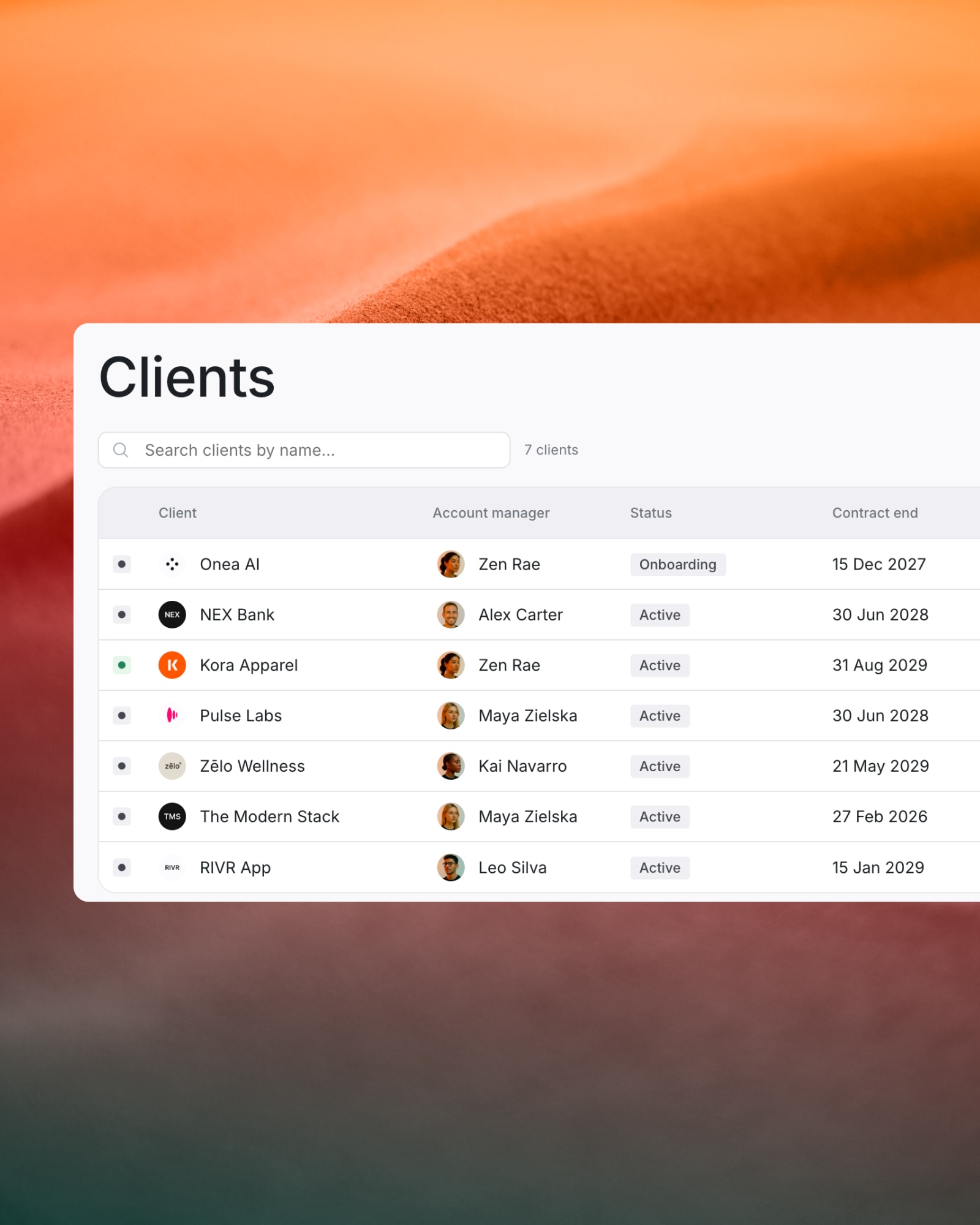
Fiive clients list
Clients: account status, contract dates and health scoring per organisation.
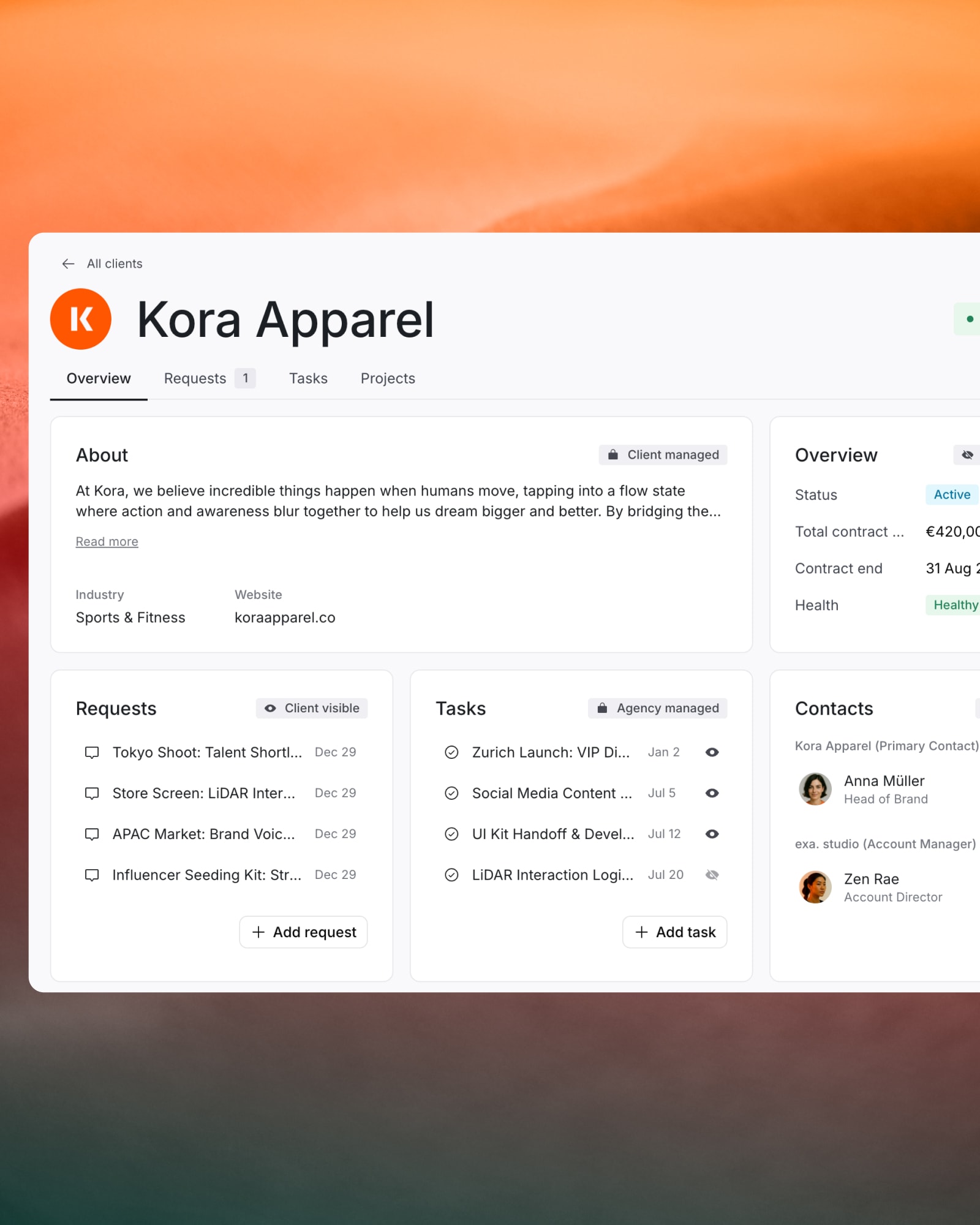
Fiive client workspace
Shared workspace: client view scoped by role and organisation via RLS.
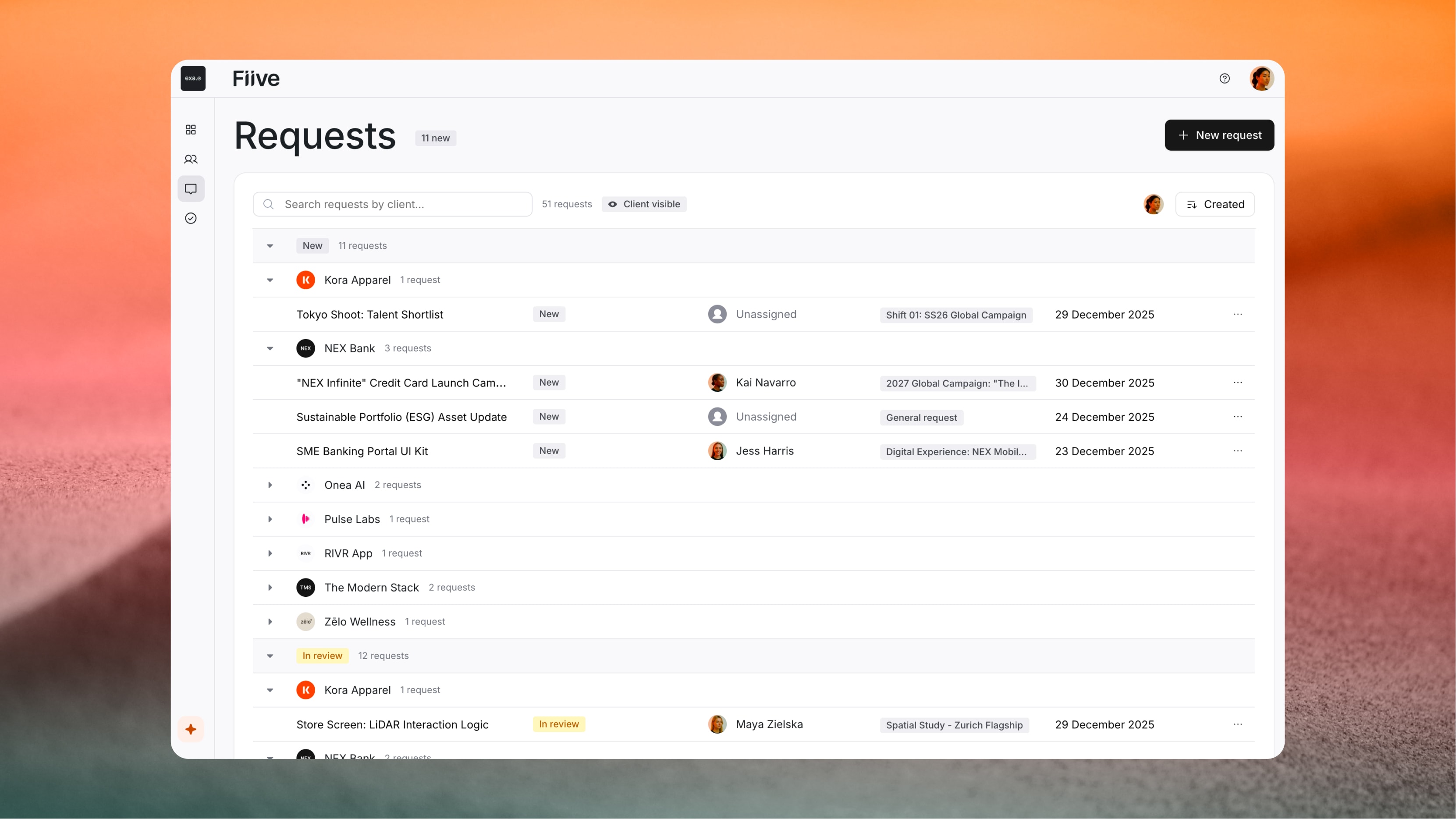
Fiive requests list grouped by status and client
Global requests: incoming client requests across all accounts, by status, client, project, and due date.
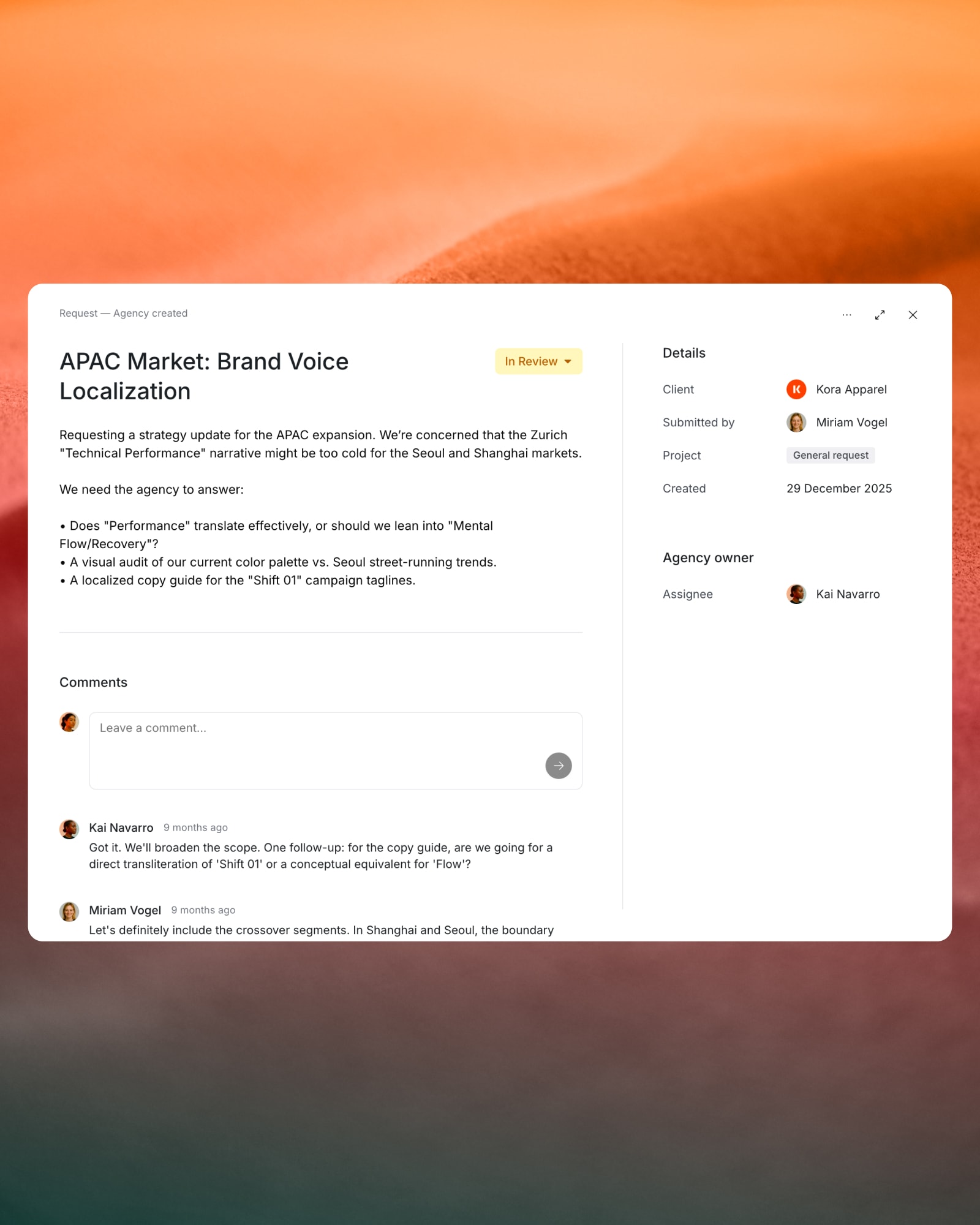
Fiive request detail with brief, status and comments
Request detail: client brief, status, comments and client details in one thread.
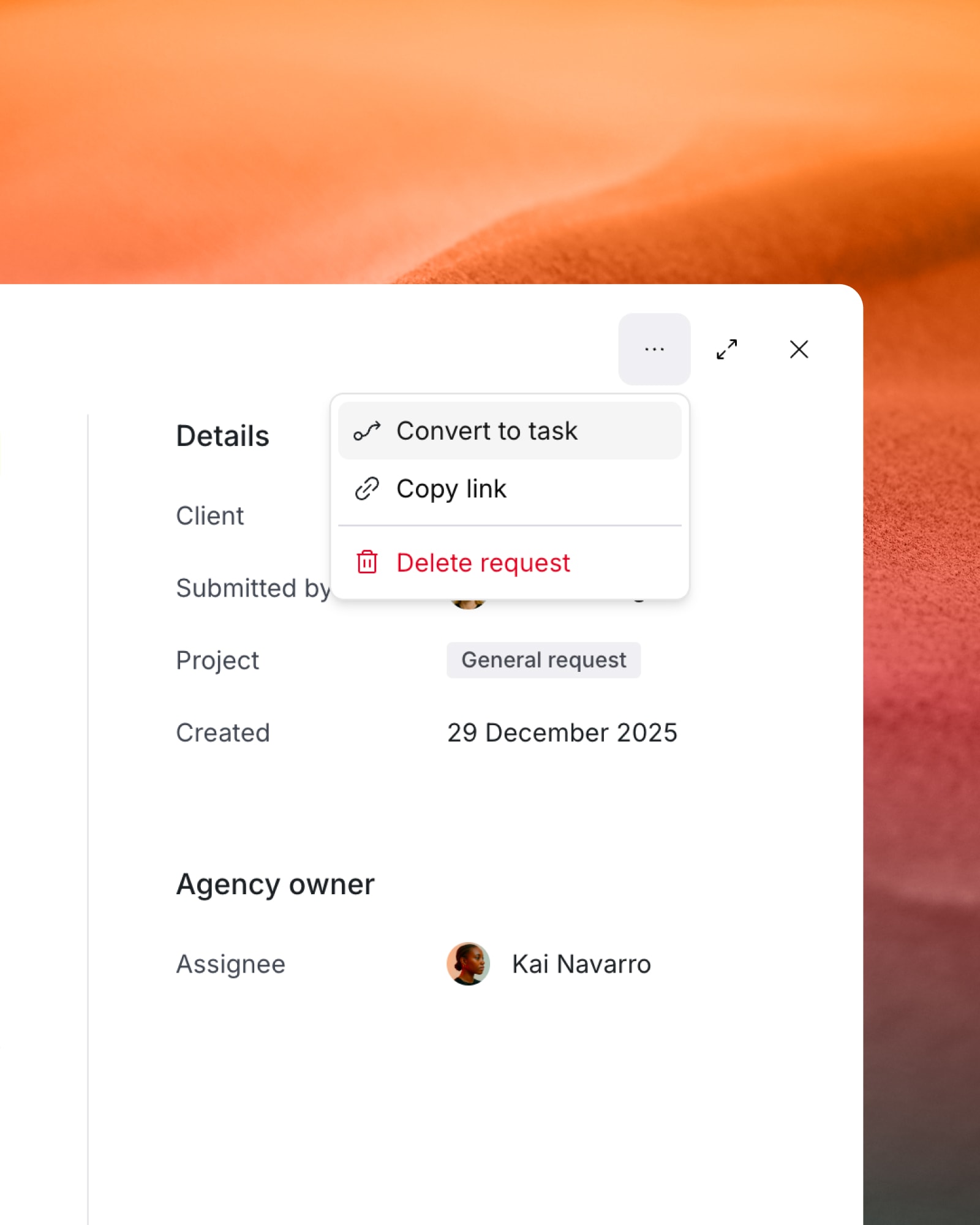
Fiive menu to convert a request into a task
Convert to task: Promotes an approved request to an assigned task, preserving the discussion thread.
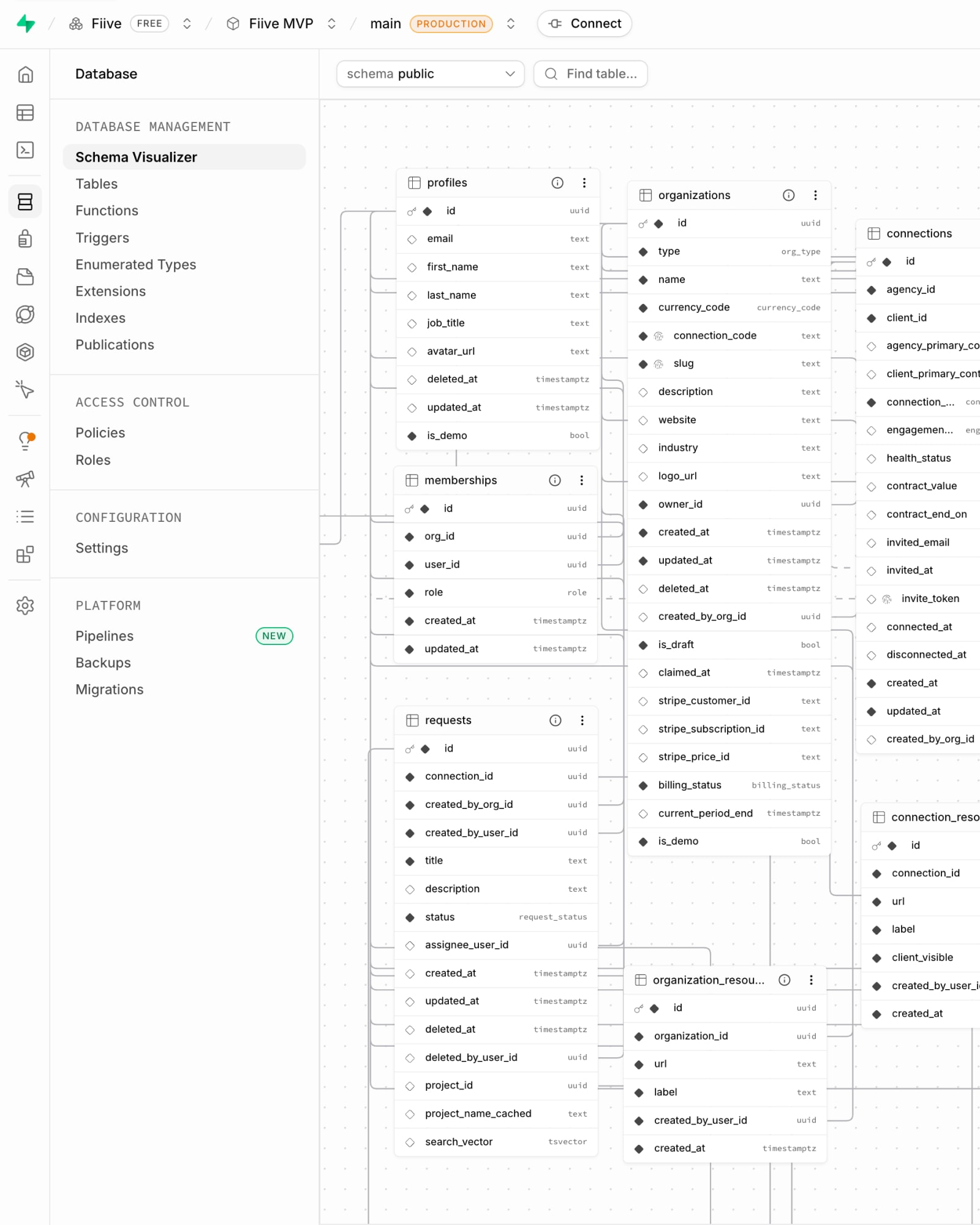
Fiive Supabase schema for organisations, memberships and requests
Data model: Relational database schema with Row Level Security (RLS) policies mapping multi-tenant organization boundaries, memberships, and request entities.
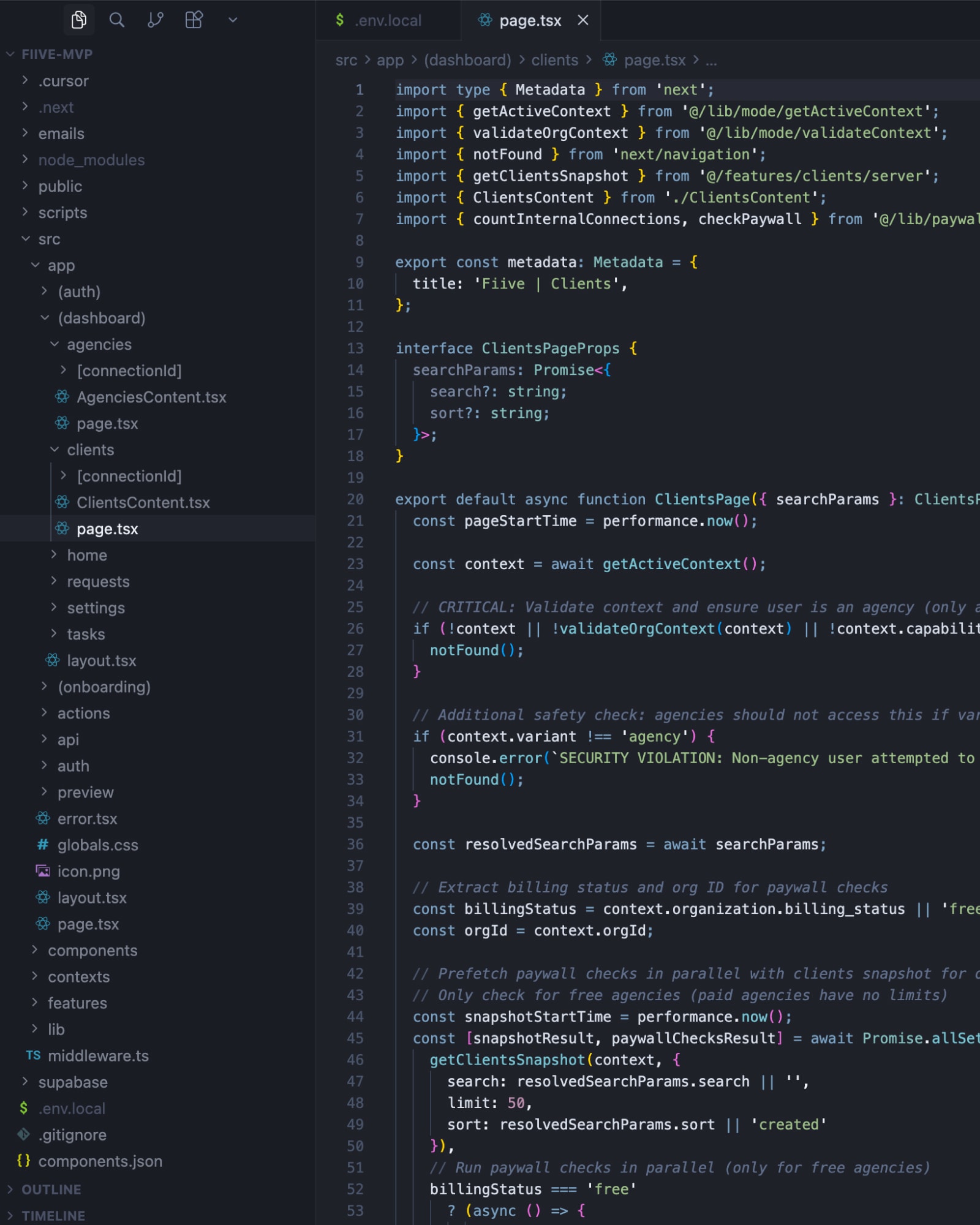
Fiive clients page in Cursor, checking organisation context before data loads
Application architecture: Domain-driven Next.js App Router directory structure paired with server-side context validation for tenant isolation.